

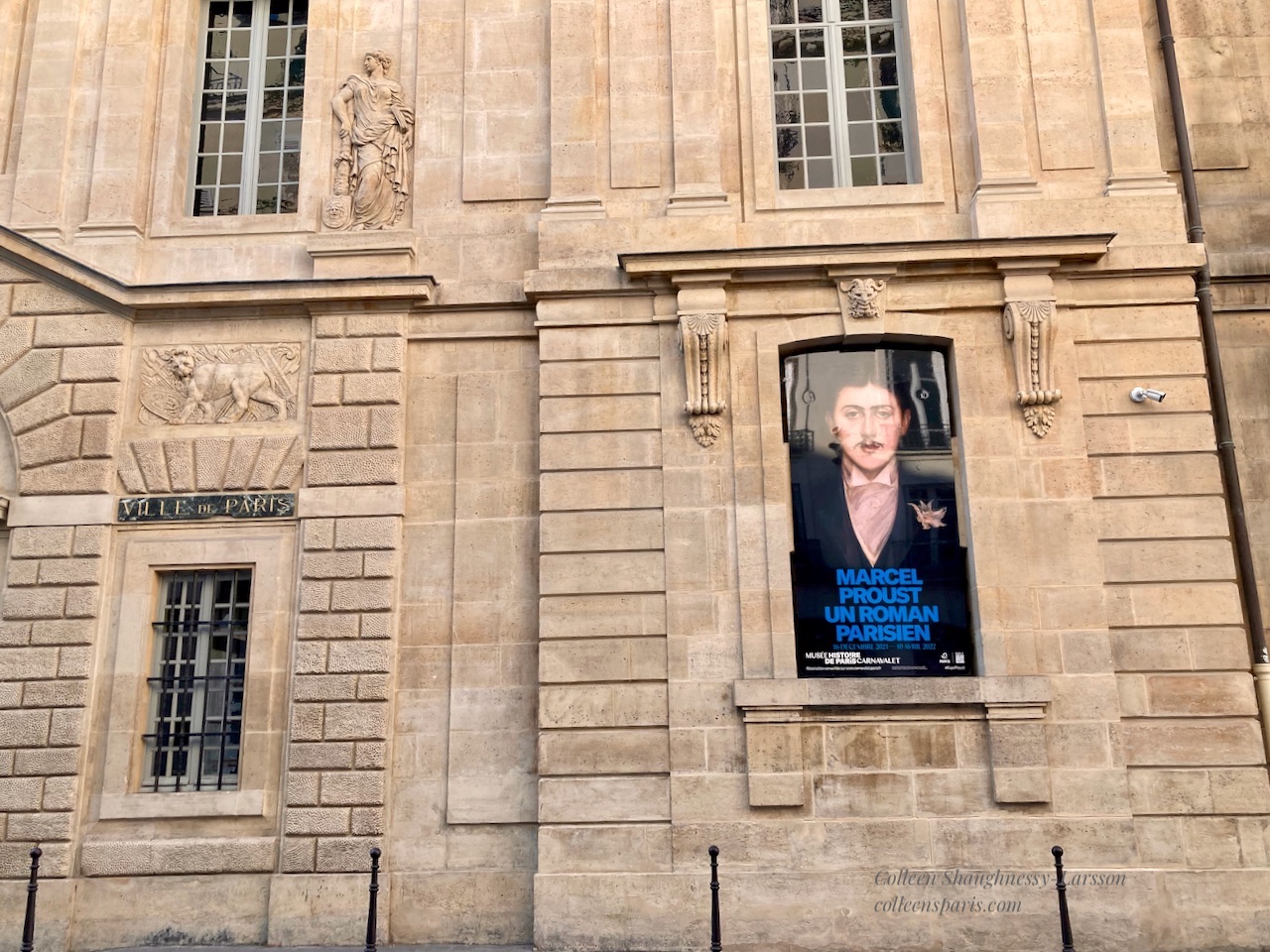
An unexpected pleasure came with choosing the wrong ticket. The ticket was not a Carnavalet Museum general admission ticket. My ticket was actually a timed ticket for Marcel Proust. Marcel Proust, is a well-known, popular Parisian author (1871–1922) who set his novels in the Belle Epoque of 1890s until 1922. The Marcel Proust, “A Parisian Novel” (Un Roman Parisien) exhibit is a map of characters, fashion and scenery (exterior and interior) for the visitor’s novel journey. A Proust quote says, “I always had a map of Paris at hand”. This is one reason I liked the exhibition. My map is now electronic and always with me. I always have a map of Paris at hand.
Walking through the exhibit made me think of the Netflix series “Emily in Paris“. I watch the show trying to guess how many locations I recognize and pinpoint them on my memory map or phone map.
At the exhibit, not only did I take away maps of apartment interiors and exteriors, but also fashion of the period. Two examples on display are Proust’s otter fur-collared coat and an elegant silk and pearl button “robe toilette” (literally, a bathrobe). The exhibit’s phone application setting number 5 tells the story of how devoted Proust was to the coat he wore winter and summer until his death. After his death, an antique dealer wore it fishing on the Seine, until a Proust collector acquired and saved it. I recommend the exhibition for its history, art, and voyage into a real time with the author’s poetic license for imagination.
What You Will See
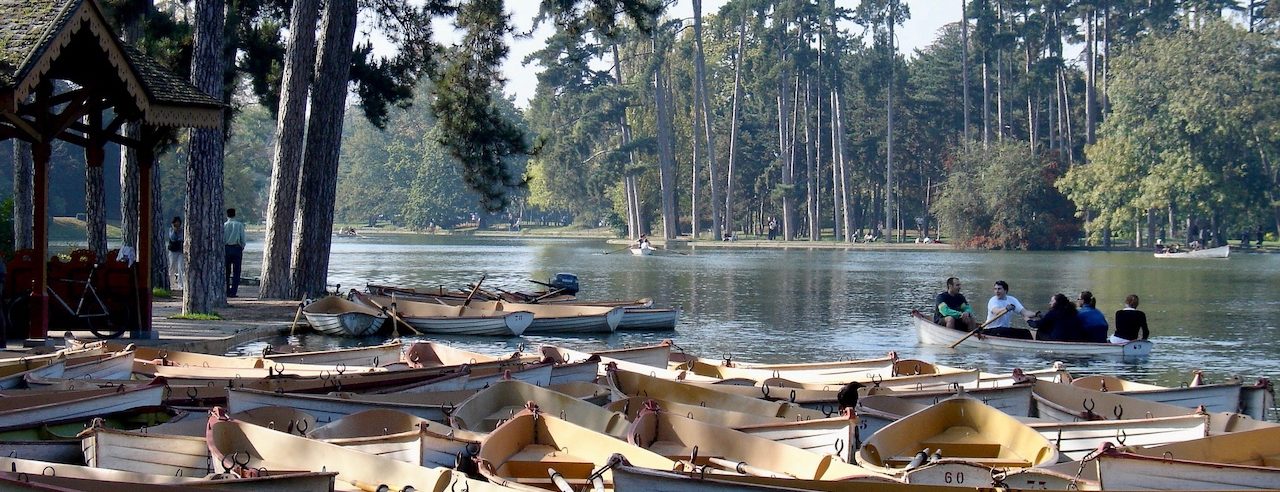
Marcel Proust takes a voyeuristic look at the city and its inhabitants. The world of Proust’s Right Bank society, fashion and events borders Park Monceau, Place de la Concorde, Auteuil, Bois de Boulogne and l’Etoile. Have I read his novels? No. I did watch the Raúl Ruiz’s film Le Temps retrouvé (Time Regained). Clips are shown during throughout the exhibit. The clips show the costumes, tables, interiors in the Belle Époque (1871-1914) settings. Many of his fictional characters were developed from real life artists, aristocrats and financial, industrial and cultural bourgeoisie he observed first hand and who later recognised themselves in the novels. School friends and family and acquaintance introductions provided Proust transport into Right Bank upper class society.
The exhibit displays over 280 paintings, sculpture, interviews, photographs, etc. illustrating Proust’s fictional Paris. The late Belle Époque was a period of technological innovation. Look for the Thèâtrophone, a precursor to the radio. With the Thèâtrophone subscription, Proust could listen to any theatrical event with “impeccable quality” in the “comfort of the home that you love”. An option to listening individually, was the next, newest innovation: the loud speaker, “to offer your guests, perfect sound without distortion”.
Get and Keep the Phone App
For modern, perfect sound and story telling, download the smartphone application for Marcel Proust (available until April 10, 2022) to your phone. The app costs 2,99 Euros and includes permanent Musée Carnavalet exhibits. Being early to the exhibit gave me time to download the application and begin my virtual visit while waiting for my 4 pm entry. Each temporary exhibit disappears once the exhibit ends but stays available on your phone.
Additional information:
Beaux Arts Edition for the Marcel Proust exhibit is 12 Euros, which I recommend
Marcel Proust Press Kit
Marcel Proust Press Release
Information on the film “Time Regained” (Le Temps retrouvé)


Pré-war
He is contemporary with the artists born between 1869 and 1871. The art is a transition between long dresses and cinched waists and a facade of morales and what would change after the Great War.
In this exhibit are the subtleties of prejudice when Jewish families saw themselves as French while society preferred a stigmatisation. The beauty is that art shows people (i.e., French) as equals. T
The art labels explain the scenes almost of the illustration of certains scenes one finds in the books of Marcel Proust.
This is an exhibit rich with art, dance, theatrical, Parisian and social history as well as a family’s history, which I definitely recommend.
